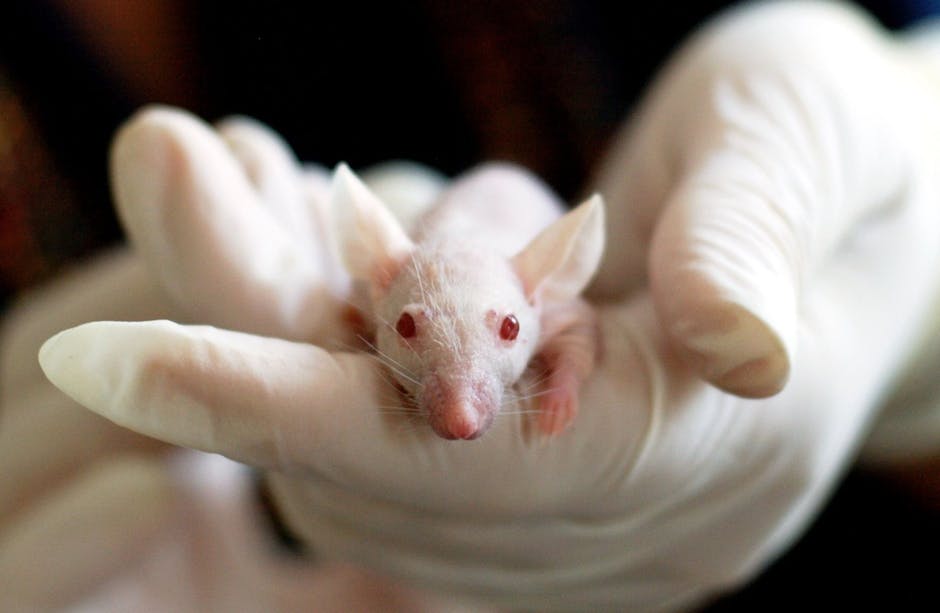
Harbour BioMed (HKEX: 02142) and AI life sciences company BioMap have jointly announced the formation of MegaStream TechBio, a newly created AI-native pipeline company targeting cardiovascular, renal, oncology, and anti-aging disease areas. The venture integrates BioMap's 268-billion-parameter xTrimo foundation model with Harbour BioMed's Harbour Mice fully human antibody platform, combining computational sequence design with in vivo biological validation. The deal represents Harbour BioMed's most structurally ambitious AI partnership to date, moving beyond software licensing or service arrangements into a co-founded entity with shared economics.
Financial terms of the founding arrangement were not disclosed. The companies stated that founding parties will be entitled to potential upfront payments, success-based milestones, and royalty sharing as MegaStream's pipeline assets are developed or out-licensed, described as consistent with industry practice. Equity splits in MegaStream were not disclosed; the company's management team is being assembled, with key appointments underway.
Deal context
The platform underlying MegaStream operates as a closed-loop discovery system. BioMap's xTrimo model — trained across seven biological modalities including DNA, RNA, protein sequences, and cellular data — performs target identification, antibody sequence design, and developability prediction. Harbour BioMed's Harbour Mice platform then generates fully human antibodies against prioritized targets through in vivo immunization and affinity maturation, producing candidates in both conventional IgG (H2L2) and heavy-chain-only (HCAb) formats. Experimental data from wet-lab validation feeds back into xTrimo to refine model accuracy iteratively.
The HCAb format is scientifically significant here. Unlike camelid-derived nanobodies, Harbour HCAbs are derived from human germline sequences, eliminating cross-species immunogenicity concerns while enabling single-domain-like architectures. The absence of a light chain also removes the mispairing problem that complicates construction of bispecific and multispecific antibodies from standard IgG scaffolds. MegaStream's stated modality scope — multispecific antibodies, XDC conjugates, in vivo CAR-T, and inhaled or oral biologics — depends substantially on this HCAb capability.