Publish all your science. Without barriers
A new hypothesis, an experimental result, a negative finding, a poster or a full paper — put it out and get a citable record immediately.
From draft to citable in minutes
Traditional journals take months to years to publish work. Repositories don’t credit your public CV, incorporate peer review processes, or interlink the content with global science. On AllSci, publish in minutes with each contribution integrated into the graph and added to your public profile.

Publish your way at any granularity
Publish scientific atoms — hypotheses, research questions, or single experimental results and observations. Publish full articles, posters, or reviews. Whatever you share, it will be citable, integrated into the global corpus, and immediately connected to your public profile. Significantly increase your contributions to science and don’t let your unpublished ideas and results go to waste.
AERIS assisted publishing workflow
As you draft, AERIS supports you along the publishing path — surfacing what has already been published that is similar to, or conflicts with, your work, so you can position your contribution, cite what matters, and publish with confidence.
- ✓Add your work — a hypothesis, result, poster or full paper
- ✓AERIS surfaces similar and conflicting published work
- ◔Simple structured review — grounded to sources, novelty checked
- ○Publish — citable and timestamped the moment it’s live
- ○Coauthors confirm, each credited by role
Peer review, better and forever
AllSci’s peer review system is open, named, structured, and perpetual. Review any scientific output and get public credit. An atomized peer review process allows you to focus on questions suited to your expertise. Every review is credited to your profile, available for its own rating, and builds your reputation as a reviewer.
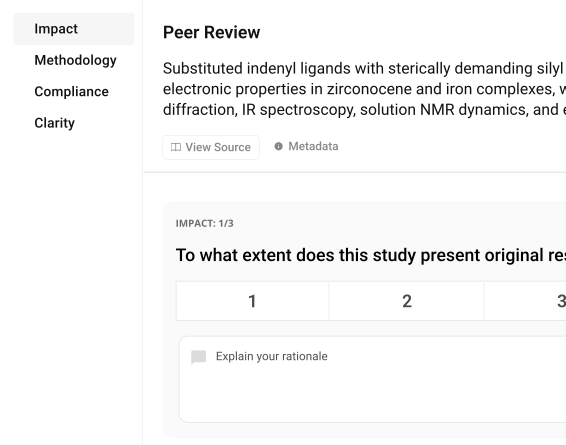
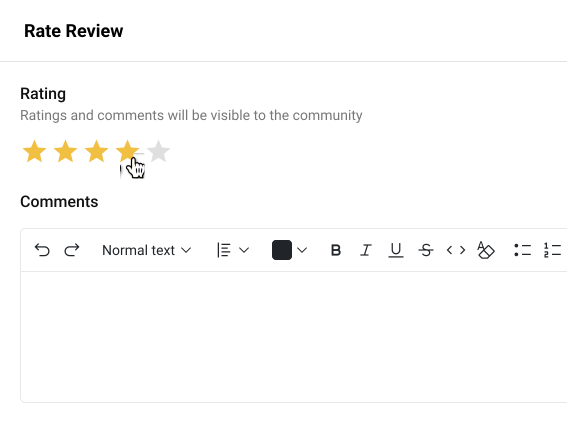
Every review can be reviewed
Anyone can rate the quality of a peer review made by others — so rigorous, constructive reviewers build reputation, and reviews carry a public quality signal.
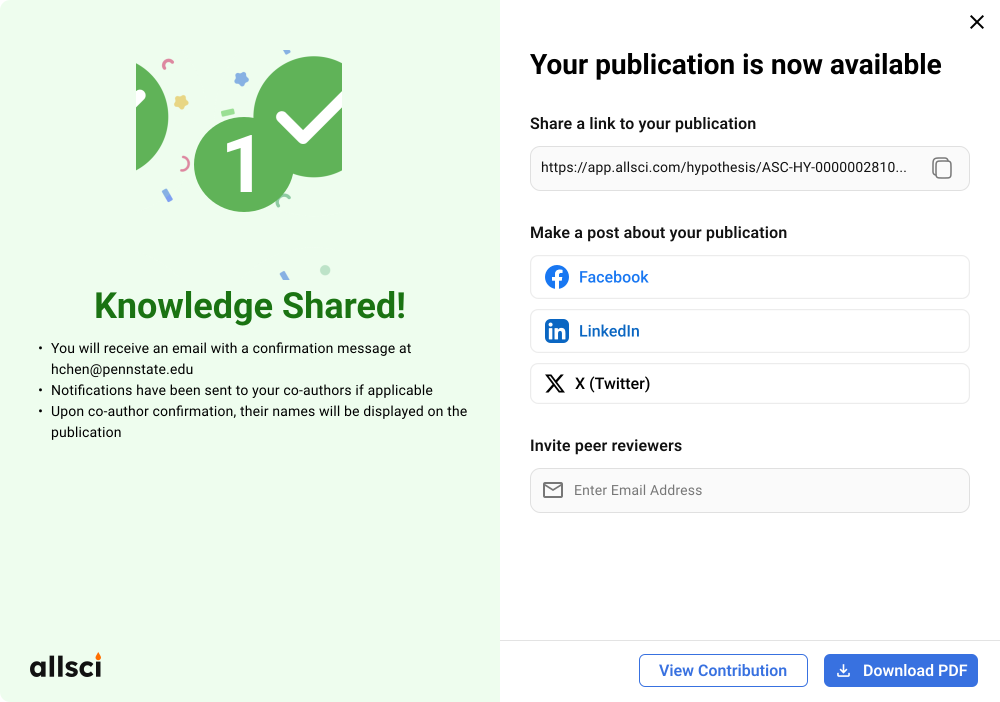
Get credit for every contribution
Every contribution — publication, peer review, or review rating — lands on your public profile. Researchers deserve public credit — and public accountability — for all their contributions to the scientific dialogue.
“This is the way scientific knowledge should be shared — free, immediate, citable, and structured around the scientific method.”
The AllSci Brief
Free, systematic R&D and deal news. Daily.